

Our Services

100% Secure Payment
Customer Data Protected

Guaranteed Return
14 Days to Return Your Order

Expert Support
Personalised Attention

Fast Delivery
Shipping Across Europe
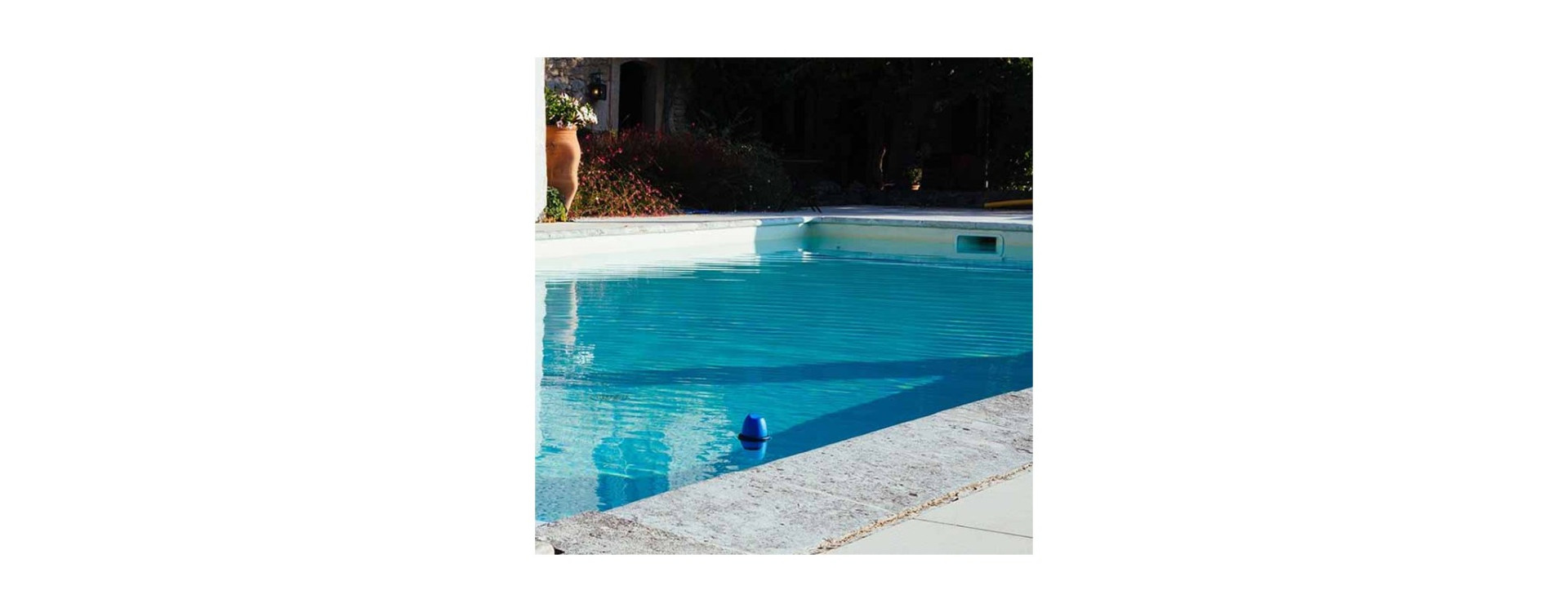
Water analysis: the key to keeping your pool in optimal condition
Perform a correct water analysis In your pool, it's essential to ensure not only the quality of the water, but also the safety and comfort of those who enjoy it. The chemical balance of the water directly influences its color, odor, clarity, and effect on skin, swimwear, and the facilities.
Monitoring key parameters, such as pH, chlorine level, and hardness, helps prevent common problems such as cloudy or greenish water, or even bacterial growth even when there's no visible algae. For this reason, more and more homeowners are seeking professional analysis to ensure effective maintenance.
Laboratory water analysis: precision for correct decisions
He laboratory water analysis It's the most accurate method for determining the exact composition of your pool water. Unlike home kits, laboratory tests identify chemical elements, metal levels, alkalinity, calcium hardness, and potential organic or inorganic contaminants.
This type of analysis is especially useful when usual treatments are not working or when symptoms are detected. strange variations in the color or texture of the water. It is also essential if you want to reuse water after a long period of disuse or after heavy rains that alter its composition.
The laboratory report allows for more accurate corrective measures, avoiding unnecessary chemical use and extending the life of the filtration system components. It also serves as a basis for preventing recurring problems.
Cloudy pool water: Is the pH high or low?
When it appears cloudy pool water, high or low pH, The first step is to measure this parameter, as it determines the effectiveness of chlorine and the chemical stability of the water. An unbalanced pH can prevent disinfectants from working properly, causing the water to lose clarity and acquire a thick or milky texture.
A low pH often creates corrosive water that damages equipment and causes skin irritation, while a high pH reduces the effectiveness of chlorine and promotes the buildup of limescale and other particles. In both cases, the result is an unattractive pool with potential health risks.
How to stabilize pH effectively
Adjusting pH shouldn't be done haphazardly. It's advisable to use specific products such as pH increasers or reducers based on the measurements. The total alkalinity of the water should also be taken into account, as this acts as a pH buffer.
The process must be accompanied by good filtration, constant inspections, and, if necessary, the use of clarifiers that agglomerate suspended particles to facilitate their removal.
Green pool water without algae: other factors to consider
Find green pool water without algae It may seem contradictory, but it's more common than you might think. This type of coloration is often not due to living organisms, but rather to the presence of metals such as copper or iron that oxidize and turn the water green.
Another factor may be the combination of an inadequate disinfectant and an unbalanced pH, which prevents organic particles from being properly eliminated. In these cases, applying algaecides will not solve the problem, as there are no organisms to combat, only altered chemical conditions.
Signs indicating a non-biological cause
To know if the green water is not caused by algae, you should observe:
-
Absence of plant residues or sediments on walls or bottom
-
Green water without foam or bad smell
-
Chlorine level within normal parameters
In these cases, the most effective option is to perform a metal analysis and apply sequestering products that eliminate the minerals responsible for the coloration.
Green water in the pool due to rain: what to do correctly
The green pool water due to rain This is another common problem, especially in outdoor or poorly covered pools. Rain washes away dirt, leaves, and contaminants, which unbalances the pH, dilutes the chlorine, and facilitates the growth of algae or cloudy water, even if the water was previously clean.
After a heavy rain, water chemistry levels change rapidly. Therefore, it's essential to conduct a thorough check of parameters such as free chlorine, pH, alkalinity, and dissolved solids. Ignoring this situation can lead to bacterial growth in just 24 hours.
Basic steps after a storm
After a rain event, it is advisable to follow this routine:
-
Remove leaves and large debris with a net or pool cleaner
-
Measure and adjust pH and chlorine immediately
-
Filter for several hours without interruption
-
Add clarifier or flocculant if the water is still cloudy.
-
Perform a detailed analysis if the water does not improve within 24 hours.
Recovering pool water: solutions without emptying
The goal of many owners is recover pool water without having to empty it, both for sustainability and economic reasons. When water is green, cloudy, or contaminated, it can still be saved if the right measures are taken in a timely and data-driven manner.
This process requires adjusting chemical values, removing residues, cleaning filters, and sometimes applying shock treatments. However, when action is taken quickly and accurately, 90% of pools can be recovered without the need for water changes.
Advantages of recovering water instead of replacing it
-
Reduction in water consumption and operating costs
-
Lower environmental impact during maintenance
-
Preservation of the previously established chemical equilibrium
Products that facilitate water analysis and pool maintenance
To keep pool water in optimal condition, occasional chemical treatments are not enough. Technological tools allow for automating processes, anticipating imbalances, and reducing both unnecessary product use and the time spent on monitoring tasks. In this context, smart analyzers have become an ideal solution.
These devices allow real-time measurement of key parameters such as pH, temperature, and redox potential (ORP), generating alerts when an imbalance is detected. This helps ensure immediate action with precise solutions, without having to wait for the problem to manifest itself visually. Furthermore, thanks to mobile applications, water status can be monitored from anywhere.
Smart pool analyzer that floats on water
He Smart Pool Analyzer That Floats on Water | Connect Go It's one of the most advanced solutions on the market. This device monitors pH, temperature, and ORP levels in real time, and sends alerts directly to the user's smartphone via an intuitive and easy-to-use app. Its high-precision all-in-one sensor guarantees reliable data at all times, facilitating decision-making and accurate chemical dosing.
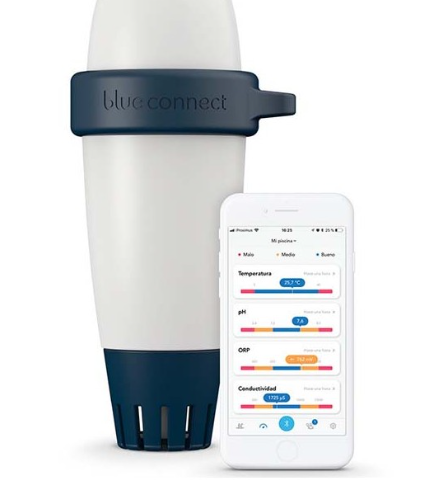
In addition to accurate measurements, its smart notification system allows for anticipated adjustments before the water deteriorates. This translates into significant savings in time, money, and products, as it avoids unnecessary or excessive treatments. Installation requires no tools or technical knowledge, making it an affordable option for any pool owner.
The device It is designed to float, making it easily adaptable to any type of pool. Its durability, sustainability, and compatibility with various systems make it an ideal choice for those who want to maintain clean water effortlessly. Thanks to its step-by-step instructions, even those with little experience can successfully manage chemical treatments. Its measurement accuracy allows for confident decisions with professional support.
This technology represents a breakthrough in pool maintenance, reducing dependence on manual analysis and delayed corrective interventions. Incorporating it into daily water care transforms the process into an automated, efficient, and much more reliable task.
Trust La Tienda del Jardín to take care of your pool.
In The Garden ShopYou'll find all the products you need to perform a proper water analysis, from home kits to solutions for treating metals, regulating pH, and restoring green water. We also offer advice and preventative maintenance products, such as covers, clarifiers, and high-efficiency filters.
Visit our store and discover how to keep your pool clean, clear, and healthy all year round without any hassle.
Related posts
-
 How to install an irrigation diffuser or sprinkler?
Once you've laid the main line throughout your yard according to your plans, equipped with the valves and piping you...
How to install an irrigation diffuser or sprinkler?
Once you've laid the main line throughout your yard according to your plans, equipped with the valves and piping you... -
 How to choose the best kennel for your dog
Provide your pet with a decorative, safe, and efficient kennel that allows them to sleep, rest, and be protected.
How to choose the best kennel for your dog
Provide your pet with a decorative, safe, and efficient kennel that allows them to sleep, rest, and be protected. -
 STEPS TO CREATE AN AUTOMATIC IRRIGATION SYSTEM
Implement an automatic irrigation system that allows you to have time without neglecting your garden.
STEPS TO CREATE AN AUTOMATIC IRRIGATION SYSTEM
Implement an automatic irrigation system that allows you to have time without neglecting your garden. -
 How to choose the best fertilizer for your garden
Choose the best fertilizer for the health and growth of your garden plants.
How to choose the best fertilizer for your garden
Choose the best fertilizer for the health and growth of your garden plants. -
 RAIN BIRD ESP-RZX INDOOR AND OUTDOOR IRRIGATION PROGRAMMER REVIEW
If you are If you're a gardening enthusiast, you should choose a good irrigation controller that can keep your lawn...
RAIN BIRD ESP-RZX INDOOR AND OUTDOOR IRRIGATION PROGRAMMER REVIEW
If you are If you're a gardening enthusiast, you should choose a good irrigation controller that can keep your lawn... -
 10 Most Recommended Types of Irrigation Sprinklers
When you need irrigation sprinklers , choose one that sends large droplets of water close to the ground. These...
10 Most Recommended Types of Irrigation Sprinklers
When you need irrigation sprinklers , choose one that sends large droplets of water close to the ground. These...
Leave a comment