

Our Services

100% Secure Payment
Customer Data Protected

Guaranteed Return
14 Days to Return Your Order

Expert Support
Personalised Attention

Fast Delivery
Shipping Across Europe

Boost Your Plants: How to Choose the Perfect Fertilizer for Exceptional Growth
1. Nitrofoska Special Fertilizer 12+12+17+2
Composition and Characteristics:
- NPK and other elements: With a ratio of 12% nitrogen, 12% phosphorus, and 17% potassium, along with 2% other nutrients (such as magnesium or micronutrients, depending on the manufacturer), this fertilizer stands out for its balance.
- Application: It is ideal for horticultural and fruit crops, and in areas where both root development and flowering need to be stimulated.
- Advantages:
- Root development: The balanced presence of phosphorus favors the formation of strong roots.
- Flowering and fruiting: Potassium contributes to nutrient transport and tissue strengthening, which results in better fruit and flowers.
- How to use: It is recommended to apply it at the beginning of the production cycle or before critical stages such as flowering, distributing it evenly in the root zone and complementing it with irrigation to facilitate absorption.

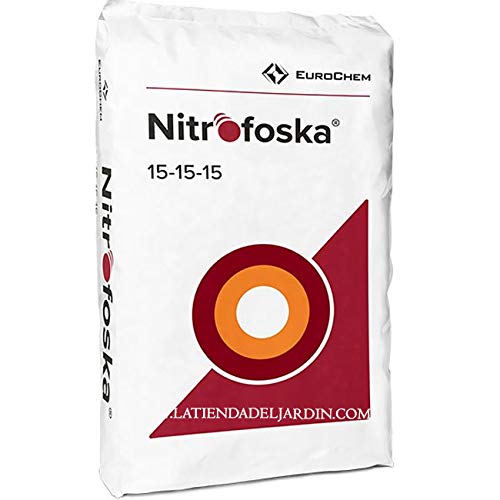
2. Triple 15 Fertilizer (15-15-15 + 5% Sulfur)
Composition and Characteristics:
- Balanced NPK: With 15% of each of the primary nutrients (nitrogen, phosphorus, and potassium), this product is one of the most popular for balanced nutrition.
- Sulfur added: 5% sulfur helps in protein formation and plant metabolism, being essential for certain crops.
- Application: It is suitable for a wide range of crops, including grasses, vegetables, and fruit trees, thanks to its balanced intake that promotes uniform plant growth.
- Advantages:
- Versatility: Its formula makes it ideal for both high-yield crops and small gardening areas.
- Ease of use: It allows for simple application and is easily integrated into general fertilization systems.
- How to use: Dosage varies depending on the crop and soil condition, but it's recommended to follow the manufacturer's instructions. It's generally spread on the surface and incorporated into the substrate or applied as part of a fertigation regimen.
3. ENTEC Nitrofoska 20+10+10 Fertilizer Fertilizer
Composition and Characteristics:
- High nitrogen concentration: With 20% nitrogen, this fertilizer is designed to promote rapid and vigorous growth in the early stages of development.
- Controlled release: ENTEC technology ensures a gradual release of nutrients, avoiding concentration peaks that could harm plants.
- Application: Designed for olive trees, where the initial impulse is crucial.
- Advantages:
- Accelerated growth: Perfect for stimulating initial growth and achieving a rapid crop response.
- Absorption efficiency: Controlled release allows plants to absorb nutrients optimally throughout the production cycle.
- How to use: It is recommended to apply it at the beginning of the crop cycle and make complementary applications at scheduled intervals, depending on the specific demand of the crop.

4. Blue Max 12-8-12 Complex Fertilizer
Composition and Characteristics:
- Balance and micronutrients: With a formula of 12% nitrogen, 8% phosphorus, and 12% potassium, it is complemented with micronutrients that help improve soil quality, especially in areas with deficiencies.
- Application: It is widely used in vegetables and ornamental crops, where uniform growth and an overall improvement in plant health are sought.
- Advantages:
- Improvement of degraded soils: Micronutrients and balanced composition help replenish essential elements in depleted or low-fertility soils.
- How to use: It is distributed evenly over the soil, incorporating it before sowing or during growth, and subsequent watering is recommended to facilitate the dissolution and absorption of nutrients.

5. Copper Sulfur Fertilizer Sprinkle
Utility and Mode of Action:
This fertilizer is formulated with sulfur and copper compounds, elements recognized for their fungicidal and bactericidal properties. Its action focuses on inhibiting the development of pathogenic fungi and bacteria, which is crucial for crops susceptible to diseases such as powdery mildew, downy mildew, and other fungal infections.
- Prevention and Treatment: It is used both as a preventative measure before symptoms appear and as an early treatment when the first signs of infection are detected.
- Mechanism: Copper acts by interfering with essential enzymes of microorganisms, while sulfur contributes to creating an unfavorable environment for their development.
Application and Precautions:
- Application Mode: It should be sprinkled directly onto the affected parts of the plant or onto the soil near the root zone.
- Dosage and Frequency: It is essential to follow the manufacturer's recommendations, as excessive application can cause toxicity to both the plant and the environment.
- Protective Equipment: During application, it is advisable to use personal protective equipment (gloves, mask, and goggles) to avoid inhalation or direct contact with the product.
Advantages:
- Effective Control: Significantly reduces the incidence of diseases without compromising overall crop growth.
- Integration into Health Programs: It can be combined with other cultural practices for integrated pest and disease management.

6. Floragard Fertilizer for Roses and Flowers
Utility and Aesthetic Approach:
Floragard fertilizer is designed to prolong flowering and improve the health of roses and other ornamental flowers.
- Flowering Promotion: Its balanced composition of primary and micronutrients stimulates flower formation, achieving more abundant and long-lasting flowering.
- Strengthening the Plant Immune System: It helps increase plant resistance to diseases and pests, ensuring vigorous growth and greater recovery capacity.
Application and Benefits:
- Application Mode: It is applied locally to the root zone or through fertigation during the active growth and flowering stages. The frequency will depend on the plant's life cycle and local climatic conditions.
- Visible Results: Users notice not only a prolongation of the flowering period, but also an improvement in the quality and color of the flowers, making it a highly attractive product for ornamental gardening.

General Considerations for the Selection and Use of Fertilizers
-
Soil Analysis:
- Before choosing a fertilizer, it's essential to perform a soil analysis to identify its deficiencies and adjust fertilization to the actual needs of the plants.
-
Crop Growth Stage:
- During the vegetative stage, formulas with higher nitrogen may be required, while during the flowering and fruiting stages, more phosphorus and potassium are required.
-
Dose and Frequency:
- Each product comes with specific recommendations from the manufacturer. It's important not to exceed the indicated dosage to avoid salinity or toxicity problems in your plants.
-
Application Methods:
- Incorporation into the soil: Some fertilizers are added to the substrate before sowing or transplanting.
- Fertigation: Many of these products are compatible with irrigation systems, allowing for even distribution and improved absorption.
- Foliar application: In certain cases, applying nutrients through the foliage is recommended for a faster response, especially in acute deficiency situations.
Environmental Conditions:
- Factors such as temperature, humidity, and soil type can influence fertilizer effectiveness. It's crucial to tailor application to local conditions and monitor crop response.
Related products
-
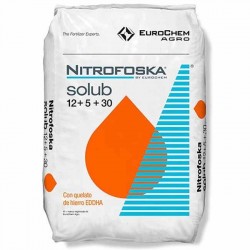
Abono soluble Nitrofoska 12-5-30, 25 Kg
Price: €82.95Application from flowering to fruit formation. 12% Nitrogen, 5% Phosphorus,... -
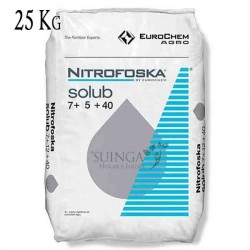
Abono soluble Nitrofoska 7-5-40, 25 Kg
Price: €63.95Application for maturing and finishing in crops with high potassium...

Related posts
-
 How to install an irrigation diffuser or sprinkler?
Once you've laid the main line throughout your yard according to your plans, equipped with the valves and piping you...
How to install an irrigation diffuser or sprinkler?
Once you've laid the main line throughout your yard according to your plans, equipped with the valves and piping you... -
 How to choose the best kennel for your dog
Provide your pet with a decorative, safe, and efficient kennel that allows them to sleep, rest, and be protected.
How to choose the best kennel for your dog
Provide your pet with a decorative, safe, and efficient kennel that allows them to sleep, rest, and be protected. -
 STEPS TO CREATE AN AUTOMATIC IRRIGATION SYSTEM
Implement an automatic irrigation system that allows you to have time without neglecting your garden.
STEPS TO CREATE AN AUTOMATIC IRRIGATION SYSTEM
Implement an automatic irrigation system that allows you to have time without neglecting your garden. -
 How to choose the best fertilizer for your garden
Choose the best fertilizer for the health and growth of your garden plants.
How to choose the best fertilizer for your garden
Choose the best fertilizer for the health and growth of your garden plants. -
 RAIN BIRD ESP-RZX INDOOR AND OUTDOOR IRRIGATION PROGRAMMER REVIEW
If you are If you're a gardening enthusiast, you should choose a good irrigation controller that can keep your lawn...
RAIN BIRD ESP-RZX INDOOR AND OUTDOOR IRRIGATION PROGRAMMER REVIEW
If you are If you're a gardening enthusiast, you should choose a good irrigation controller that can keep your lawn... -
 10 Most Recommended Types of Irrigation Sprinklers
When you need irrigation sprinklers , choose one that sends large droplets of water close to the ground. These...
10 Most Recommended Types of Irrigation Sprinklers
When you need irrigation sprinklers , choose one that sends large droplets of water close to the ground. These...
Leave a comment