- New
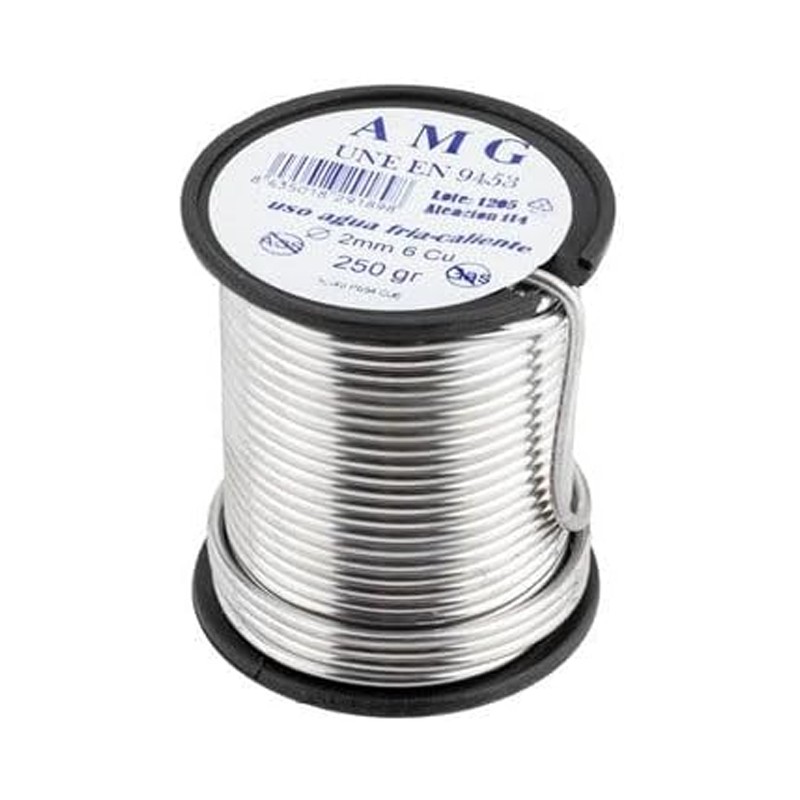
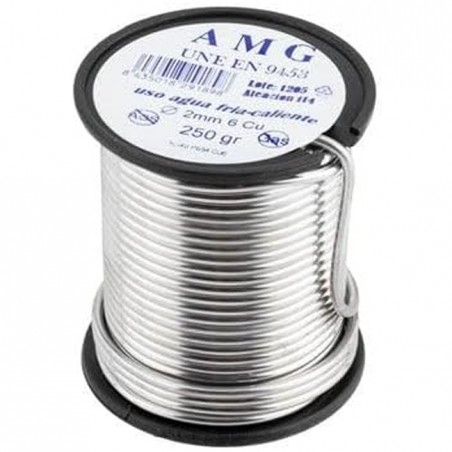

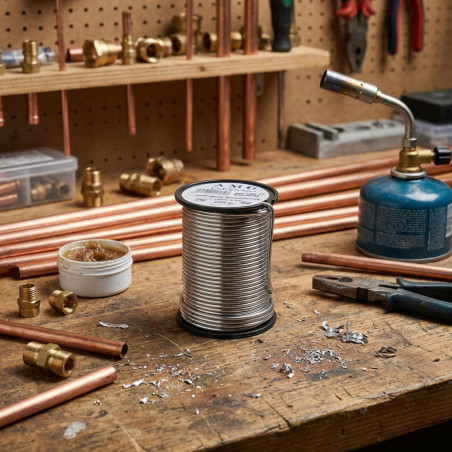
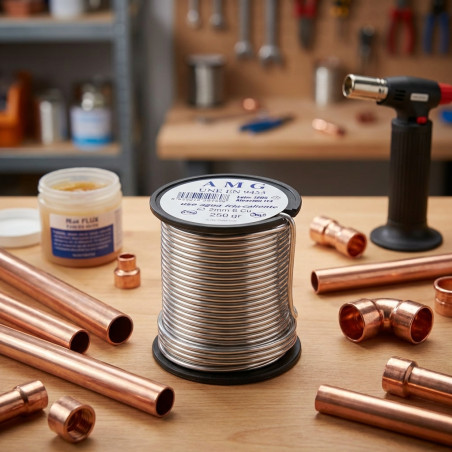
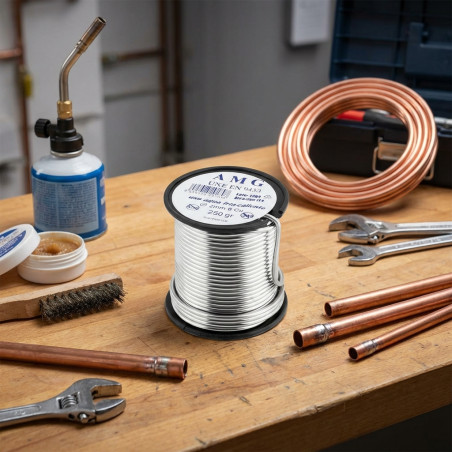

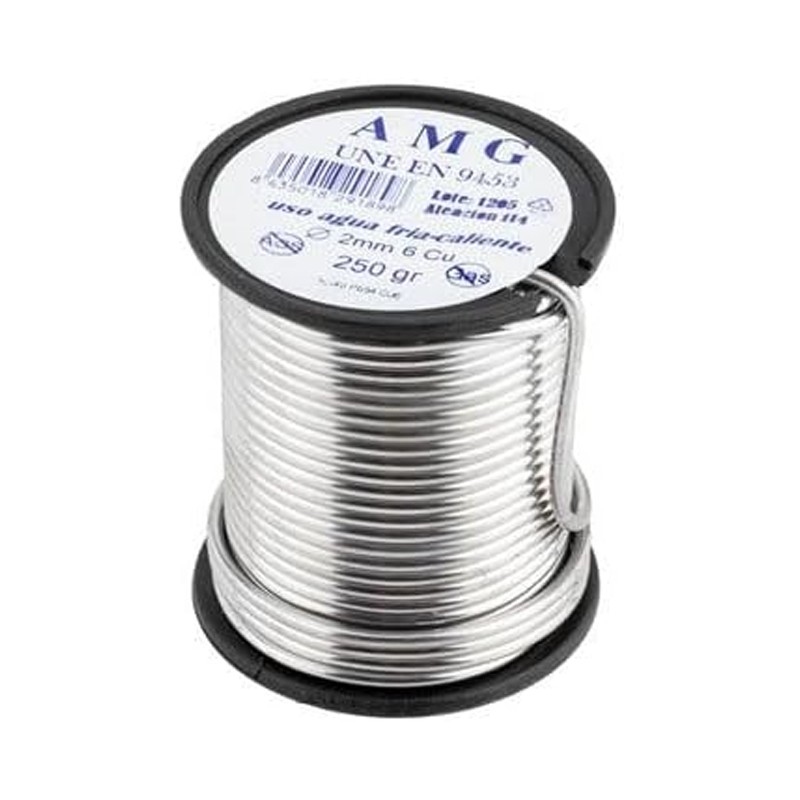
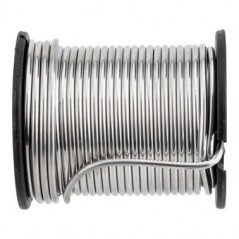
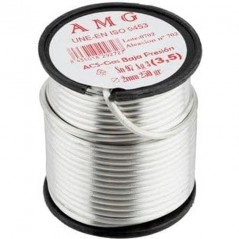
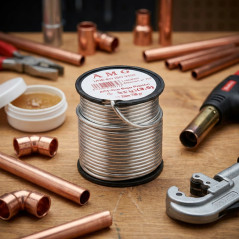
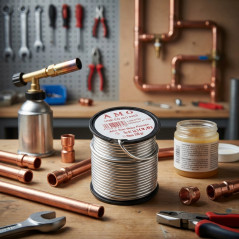
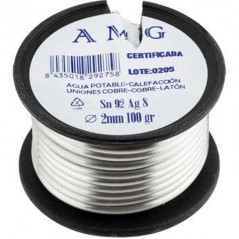
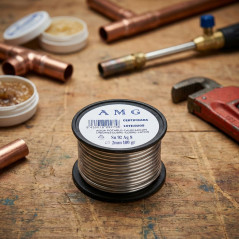
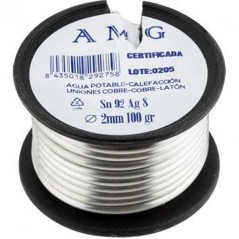
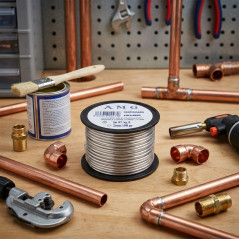
Lead-free alloy ideal for soft soldering copper pipes for drinking water, heating, and low-pressure gas, for general plumbing work; certified and approved by AENOR. Its high fluidity and excellent wetting properties allow for faster soldering and it is characterized by high mechanical strength.
Answer: This coil is ideal for basic electronic soldering and repairs of devices that don't require the precision and conductivity of silver solder. Its tin-copper alloy is suitable for general electronics work and is an environmentally friendly option, as it is lead-free.
Answer: The copper in the solder improves oxidation resistance and helps create strong, durable joints. It also reduces cost compared to tin-silver alloys, making this coil an affordable option for standard jobs without compromising quality.
Answer: Tin-copper alloy has a melting point of around 227°C, which is slightly higher than pure tin. It is recommended to set the soldering iron to a temperature between 227-250°C to achieve good solder fusion and adhesion.
Answer: Yes, this solder can be used with electronic components, although care is required when soldering due to its higher melting point, as excessive heat could damage some sensitive components. It is ideal for basic circuits and work that does not involve microcomponents.
Answer: A 100-gram spool is sufficient for small to medium-sized jobs, such as soldering wires, simple circuits, or repairing household appliances. Its weight is adequate for several occasional soldering projects or for technicians and hobbyists working on low- to medium-intensity projects.
Data sheet
No customer reviews for the moment.